FALL GROWING GUIDE · REGION II
When to plant
cabbage
in West Texas.
Cabbage occupies its patch for longer than quick salad crops. Reserve a bed location where it can remain while nearby short-season vegetables finish.
AVERAGE FALL PLANTING DATE
August 1
Seed or transplant · Frost tolerant
LAST OPTIMUM DATE
August 20
Separate guidance from source Table 2.
The source table does not give separate indoor sowing, direct sowing and transplant dates for this crop. Confirm the intended stage with local Extension before using this reference. A recurring regional reference from the 2014 Extension guide. This is not a forecast or a guaranteed growing window.
What this means for your garden.
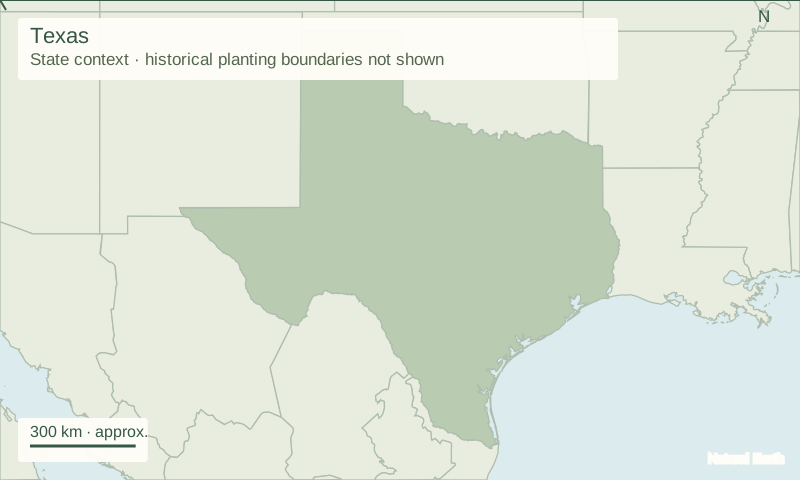
The source groups a broad western swath of Texas into Region II. Its calendar sits between the Panhandle and the central region, with midsummer starts for many fall vegetables.
For cabbage, the regional reference is August 1, with August 20 listed separately as the last optimum date. This is a large region with differences in elevation and exposure. Use the calendar to organize your plan, then check your county Extension advice and the conditions in your bed.
Your next three steps
- Choose the right start.
If you want a quick harvest from a small space, compare this longer commitment with leaf lettuce or radishes before saving your plan.
- Give the plant a good first week.
Use the spacing on the variety label rather than packing small transplants tightly together. Their eventual heads need substantially more room than the plants do at purchase.
- Keep a record you can use next season.
Save your planned date, then change it to the day you actually plant. Record completion in My Garden; the reference calendar stays separate from your own history.
WHY LOCATION MATTERS
One crop. Five different calendars.
How the same crop’s average date compares with West Texas.
Texas PanhandleJuly 1517 days earlierCentral & East TexasSeptember 131 days laterCoastal South TexasOctober 161 days laterRio Grande ValleyNovember 192 days laterSource, scope & a little context.
Table 1 supplies average fall planting dates. Table 2 supplies last optimum dates only for the crops it lists. Figure 1 defines the five historical gardening regions; these are not current USDA hardiness zones.
Texas A&M AgriLife Extension · Fall Vegetable Gardening Guide (EHT-056) ↗Dates: Table 1, p. 2; last optimum date: Table 2, p. 3. Region: Figure 1, p. 3. Source checked 2026-09-28. Editorial care notes are general planning advice; your county Extension office can refine them.
Read our methodology →Separate each growing stage.
- Choose seed or a transplant. Direct sowing, indoor seed starting and setting out a seedling are different operations. Confirm which one the local calendar describes.
- Sow or harden off. Follow crop and variety guidance for seed depth, spacing and temperature. Harden off nursery-grown seedlings before setting them outdoors.
- Check spring and fall timing. Use separate local guidance for each season. Heat and the time left for the crop to mature matter alongside cold tolerance.
These are general growing stages, not local planting dates. Minnesota calendar dates are not transferred to other regions. Read the Extension growing-stage guide ↗
West Texas in context