Your seasonal context
Understand the place before the date.
How local is this information?
- Postal precision
- Representative postal coordinates · not your garden address
- Climate reference
- NOAA · 1991–2020 · 12.0 km from the postal reference point
- Planting dates
- General crop stages · choose a locally advised date
- Source review
- September 28, 2026 · source data period is separate
Distance alone does not establish a climate match. Elevation, coastal exposure, urban shelter and soil can differ; the postal location has no verified garden elevation.
The postal reference point is near 37.976°, -88.120°. At the nearest qualifying NOAA station reference (CARMI 3, IL US), July is the warmest month on average (24.8°C), while January is the coolest (-0.4°C). This does not measure your garden’s temperature.
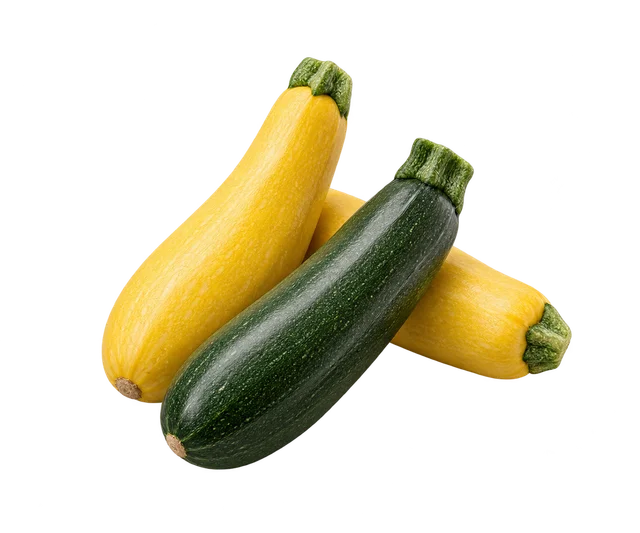
Reference monthly means are below freezing in January. This signals a need to assess protected growing, not a calculated planting prohibition. Summer squash are frost sensitive: check local frost guidance, soil conditions and the remaining growing season. A monthly average cannot identify a safe planting day.
Light at your latitude
At 37.976° N, the length of the day changes independently of temperature. Compare the middle of three seasons when planning your garden.
Geometric daylight estimate from latitude and solar declination, rounded to 0.1 hour. This is time above a flat horizon, excluding atmospheric refraction, hills, buildings and cloud cover. It is not the direct-sun exposure of your bed. About solar-position calculations.
| Month | Mean air temperature | Monthly precipitation total |
|---|---|---|
| January | -0.4°C (31°F) | 88.9 mm |
| February | 1.5°C (35°F) | 79.0 mm |
| March | 6.8°C (44°F) | 111.0 mm |
| April | 13.1°C (56°F) | 131.3 mm |
| May | 18.4°C (65°F) | 131.1 mm |
| June | 23.3°C (74°F) | 109.5 mm |
| July | 24.8°C (77°F) | 112.5 mm |
| August | 23.8°C (75°F) | 88.9 mm |
| September | 20.1°C (68°F) | 81.8 mm |
| October | 13.6°C (56°F) | 87.1 mm |
| November | 6.7°C (44°F) | 107.2 mm |
| December | 1.7°C (35°F) | 99.1 mm |
Historical station normals are not current weather or a last-frost prediction. Station elevation: 102 m. Temperature coverage code: S; minimum contributing years across months: 25. Precipitation coverage code: S, R. Monthly totals are not daily rainfall or a watering schedule. NOAA normals can include adjustments and filled gaps; S means standard coverage and R means representative coverage. Open official station data.
Compare NASA regional grid context · 2001–2020
| Month | Mean air temperature | Mean precipitation / day |
|---|---|---|
| January | -0.1°C (32°F) | 2.47 mm |
| February | 1.6°C (35°F) | 2.88 mm |
| March | 7.5°C (46°F) | 3.65 mm |
| April | 13.8°C (57°F) | 4.19 mm |
| May | 19.0°C (66°F) | 3.99 mm |
| June | 23.7°C (75°F) | 3.49 mm |
| July | 25.5°C (78°F) | 3.47 mm |
| August | 25.1°C (77°F) | 2.76 mm |
| September | 21.4°C (70°F) | 2.69 mm |
| October | 14.4°C (58°F) | 3.21 mm |
| November | 7.4°C (45°F) | 3.24 mm |
| December | 2.1°C (36°F) | 3.14 mm |
NASA POWER regional grid, 0.5° latitude × 0.625° longitude. Grid center 38.000°, -88.125°. Monthly mean air temperature is neither a nightly low nor soil temperature. Rainfall averages do not set a watering schedule. Open the climate source.
Compare nearby places
Summer squash around 62834
Explore the closest listed postal areas by straight-line distance between their representative coordinates. A nearby garden may still have different soil, shelter or elevation.
| Postal area | Distance | Jan | Jul |
|---|---|---|---|
| Emma62834 · this area | — | -0.1°C | 25.5°C |
| New HavenIL 62867 | 8.5 km | -0.1°C | 25.5°C |
| MaunieIL 62861 | 9.3 km | -0.1°C | 25.5°C |
| CarmiIL 62821 | 12.3 km | -0.1°C | 25.5°C |
| OmahaIL 62871 | 17.4 km | -0.1°C | 25.5°C |
| Norris CityIL 62869 | 17.9 km | -0.1°C | 25.5°C |
| CrossvilleIL 62827 | 21.8 km | -0.1°C | 25.5°C |
Distances use GeoNames representative postal coordinates, which may be estimated; they are not driving distances. Nearby areas often share one NASA POWER grid cell, so identical climate values are expected. Differences shown here describe the climate grids, not a measured difference between individual gardens.
Regional advice
Choose a local planting window.
University of Illinois Extension
State Extension referral; ask for county-specific vegetable guidance.
Ask which dates refer to indoor seed starting, direct sowing or transplanting, and whether they cover spring or fall. This referral is not a verified postal-code planting calendar.
Find an official community climate stationThe growing checklist
Give summer squash a considered start.
Leave the room specified for your variety even when the seedlings look small. Check leaves and growing tips as part of your weekly walk through the garden.
- Direct sow in the bed. Use the seed packet for sowing depth and spacing. Check the actual soil temperature and moisture before choosing a sowing day.
- Check outdoor conditions. Wait for crop-appropriate warm soil and a suitable frost-free window. A warm monthly average does not rule out damaging cold nights.
- Plan the next sowing separately. Check local spring or fall advice and the variety’s maturity time before scheduling another batch. Calendar reminders do not establish a safe planting window.
Inspect soil moisture and drainage in the actual bed; rainfall normals cannot tell you whether roots need water today.
These are general growing stages, not local planting dates. Minnesota calendar dates are not transferred to other regions. Read the Extension guide to growing stages.
One small next step
Make a date to check your garden.
Choose your own reminder date after checking local advice. This is a personal planning prompt, not a calculated planting recommendation.
An .ics file works with Apple Calendar, Google Calendar and Outlook. Your chosen date stays in your browser until you download it.
What this postal area includes
Emma.
A ZIP area is a postal geography, not a neighborhood or municipal boundary. Place names may include multiple communities. The representative coordinates may be estimated. Nearby gardens can differ in elevation, shelter, slope and soil.