Your seasonal context
Understand the place before the date.
The V5S area uses a representative location near 49.218°, -123.038°. In the nearby historical climate grid, August is the warmest month on average (18.3°C), while December is the coolest (4.3°C). November has the highest mean daily precipitation (6.86 mm).
No monthly mean in this grid is below freezing. Individual cold nights can still occur; this does not establish a frost-free season. Bush snap beans are frost sensitive: confirm local frost guidance and suitable soil conditions before sowing or transplanting.
Light at your latitude
At 49.218° N, the length of the day changes independently of temperature. Compare the middle of three seasons when planning your garden.
Geometric daylight estimate from latitude and solar declination, rounded to 0.1 hour. This is time above a flat horizon, excluding atmospheric refraction, hills, buildings and cloud cover. It is not the direct-sun exposure of your bed. About solar-position calculations.
| Month | Mean air temperature | Mean precipitation / day |
|---|---|---|
| January | 4.5°C (40°F) | 6.26 mm |
| February | 4.7°C (40°F) | 3.63 mm |
| March | 6.5°C (44°F) | 4.57 mm |
| April | 9.1°C (48°F) | 2.91 mm |
| May | 12.8°C (55°F) | 1.93 mm |
| June | 15.3°C (59°F) | 1.54 mm |
| July | 18.1°C (65°F) | 0.83 mm |
| August | 18.3°C (65°F) | 1.07 mm |
| September | 15.3°C (60°F) | 2.35 mm |
| October | 10.8°C (51°F) | 4.50 mm |
| November | 6.9°C (44°F) | 6.86 mm |
| December | 4.3°C (40°F) | 5.72 mm |
NASA POWER regional grid, 0.5° latitude × 0.625° longitude. Grid center 49.000°, -123.125°. Monthly mean air temperature is neither a nightly low nor soil temperature. Rainfall averages do not set a watering schedule. Open the climate source.
Compare nearby places
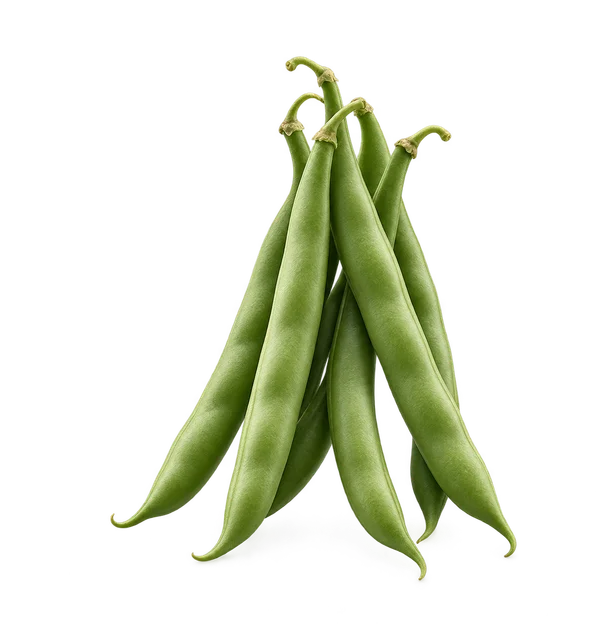
Bush snap beans around V5S
Explore the closest listed postal areas by straight-line distance between their representative coordinates. A nearby garden may still have different soil, shelter or elevation.
| Postal area | Distance | Jan | Jul |
|---|---|---|---|
| Vancouver (Killarney)V5S · this area | — | 4.5°C | 18.1°C |
| Vancouver (SE Kensington / Victoria-Fraserview)BC V5P | 2.3 km | 4.5°C | 18.1°C |
| Vancouver (South Renfrew-Collingwood)BC V5R | 2.5 km | 4.5°C | 18.1°C |
| Burnaby (Maywood / Marlborough / Oakalla / Windsor)BC V5H | 3.4 km | 4.5°C | 18.1°C |
| Richmond NortheastBC V6V | 3.6 km | 4.5°C | 18.1°C |
| Burnaby (Suncrest / Sussex-Nelson / Clinton-Glenwood / West Big Bend)BC V5J | 3.7 km | 4.5°C | 18.1°C |
| Vancouver (SE Riley Park-Little Mountain / SW Kensington / NE Oakridge / North Sunset)BC V5W | 4.3 km | 4.5°C | 18.1°C |
Distances use GeoNames representative postal coordinates, which may be estimated; they are not driving distances. Nearby areas often share one NASA POWER grid cell, so identical climate values are expected. Differences shown here describe the climate grids, not a measured difference between individual gardens.
The growing checklist
Give bush snap beans a considered start.
Use the packet spacing and keep the seed row labeled. A small second sowing may be easier to manage than planting every seed in a single session.
- Choose a variety suited to your available space and compare its days to maturity with local seasonal guidance.
- Prepare the seedbed and follow the packet depth and spacing.
- Confirm a suitable frost-free window with your local forecast and gardening adviser.
- Inspect soil moisture and drainage in the actual bed. Regional rainfall averages cannot tell you whether roots need water today.
Read University of Minnesota Extension vegetable guidance. Its crop-care principles are useful here; its Minnesota planting dates are not applied to British Columbia.
One small next step
Make a date to check your garden.
Choose your own reminder date after checking local advice. This is a personal planning prompt, not a calculated planting recommendation.
An .ics file works with Apple Calendar, Google Calendar and Outlook. Your chosen date stays in your browser until you download it.
What this postal area includes
Vancouver (Killarney).
A Canadian forward sortation area is the first three characters of a postal code. It can cover several communities, especially outside cities. The representative coordinates may be estimated. Nearby gardens can differ in elevation, shelter, slope and soil.