FALL GROWING GUIDE · REGION I
When to plant
tomatoes
in Texas Panhandle.
A fall tomato crop starts earlier than the cool weather it will eventually grow into. Use established transplants rather than beginning with outdoor seed at the reference date.
AVERAGE FALL PLANTING DATE
June 1
Transplant · Frost sensitive
LAST OPTIMUM DATE
June 25
Separate guidance from source Table 2.
The source recommends transplants for tomatoes and peppers. This outdoor reference is not an indoor seed-starting date. A recurring regional reference from the 2014 Extension guide. This is not a forecast or a guaranteed growing window.
What this means for your garden.
The northern Panhandle begins its fall garden while much of Texas is still in summer mode. In the source calendar, warm-season transplants go out in June and leafy crops follow later.
For tomatoes, the regional reference is June 1, with June 25 listed separately as the last optimum date. A late start can leave long-season crops unfinished. Look at the days to maturity on your seed packet and the local frost outlook before committing bed space.
Your next three steps
- Choose the right start.
Compare the last optimum date with your intended transplant date. If that window has passed, a shorter-season cool-weather crop may be a better use of the bed.
- Give the plant a good first week.
Check the root ball while the plant settles in. Keep moisture consistent without leaving the roots in saturated soil, and put supports in place while plants are small.
- Keep a record you can use next season.
Save your planned date, then change it to the day you actually plant. Record completion in My Garden; the reference calendar stays separate from your own history.
WHY LOCATION MATTERS
One crop. Five different calendars.
How the same crop’s average date compares with Texas Panhandle.
West TexasJune 1514 days laterCentral & East TexasJuly 130 days laterCoastal South TexasJuly 1039 days laterRio Grande ValleyAugust 161 days laterSource, scope & a little context.
Table 1 supplies average fall planting dates. Table 2 supplies last optimum dates only for the crops it lists. Figure 1 defines the five historical gardening regions; these are not current USDA hardiness zones.
Texas A&M AgriLife Extension · Fall Vegetable Gardening Guide (EHT-056) ↗Dates: Table 1, p. 2; last optimum date: Table 2, p. 3. Region: Figure 1, p. 3. Source checked 2026-09-28. Editorial care notes are general planning advice; your county Extension office can refine them.
Read our methodology →Separate each growing stage.
- Start seed indoors. Start early enough to raise a transplant before the locally recommended outdoor planting window. Indoor sowing and outdoor planting are separate dates.
- Harden off and transplant. Acclimate seedlings gradually. Set plants outside only when local frost risk, night temperatures and soil conditions suit this crop.
- Plan a fall crop separately. Check a local fall schedule and the variety’s maturity time. A spring start date is not a fall planting recommendation.
These are general growing stages, not local planting dates. Minnesota calendar dates are not transferred to other regions. Read the Extension growing-stage guide ↗
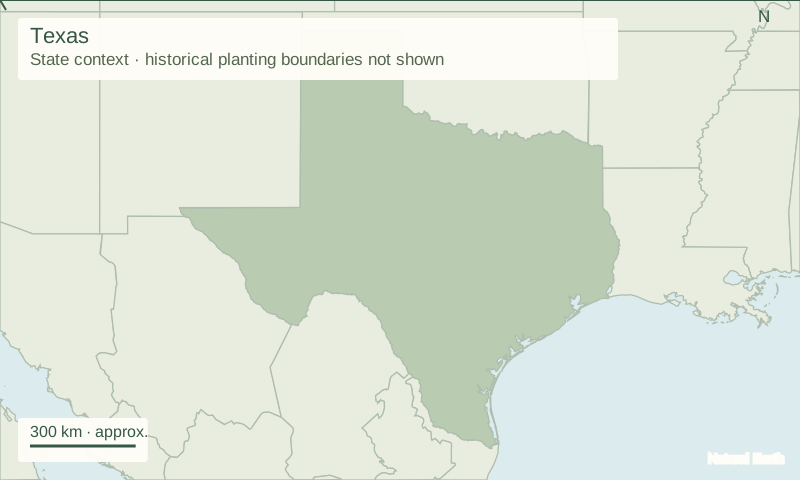
Texas Panhandle in context